

Written by Ian Article Date: 2026-08-12
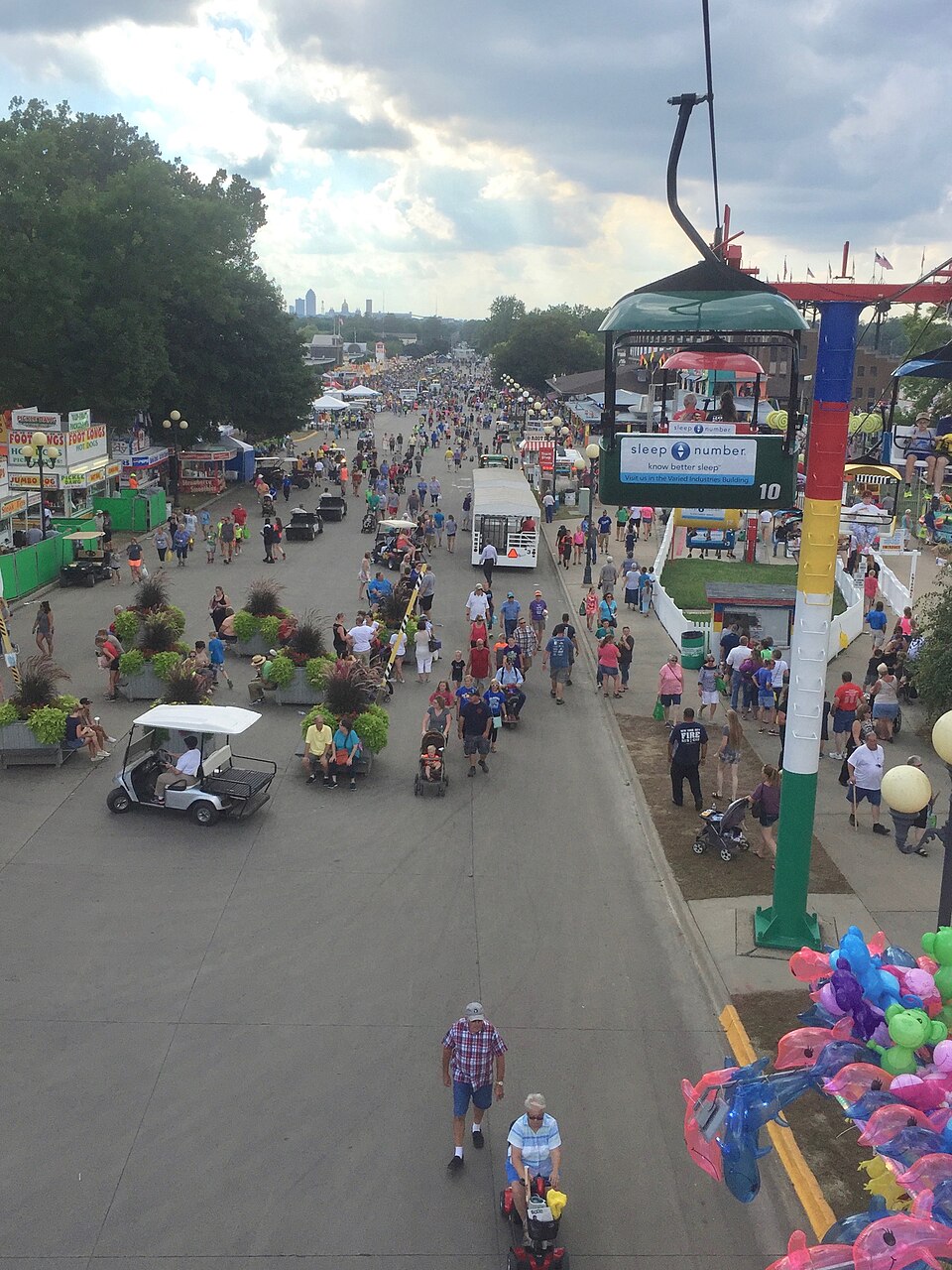
What caught our attention this week is state fair season. The Iowa State Fair opens August 13, and local news outlets across the Midwest are already pushing guides, food previews, and planning coverage as fairgoers get ready for one of the busiest late-summer traditions in the country. It is easy to focus on the fun part of that buildup: the rides, the crowds, the fried food, and the once-a-year atmosphere. It is harder to see the waste problem building underneath it.
That problem starts with scale. The Iowa State Fair says it is the state's largest event, and its final 2025 attendance reached 1,160,121 people over 11 days. In 2024, attendance hit a record 1,182,682. When an event draws more than a million visits in less than two weeks, even small disposal mistakes multiply fast. A cup tossed into the wrong bin, a half-full drink dumped onto cardboard, or a food tray mixed into a recycling stream may feel minor in the moment. Repeated across a crowd that size, those mistakes become an operations problem.
State fairs create a particularly tough sorting environment because people make disposal decisions while moving. They are carrying food, managing kids, looking for the next attraction, or trying to beat a line. In that setting, almost nobody stops to study bin signage for long. If the right choice is not obvious at a glance, the fastest choice usually wins. That is how recoverable bottles, cans, and clean cardboard end up mixed with liquids, napkins, and food waste.
The result is not just more trash. It is more contamination, more cleanup labor, and more lost material value. A recycling bin that receives too many food-soiled items can become harder to market or unusable altogether. Overflow around bins creates extra work for grounds crews. Mixed loads can force a site to pay for disposal on material that might have been recoverable if the sorting decision had been easier at the point of disposal.
This is why fairs are useful examples for the broader waste industry. They compress a year-round problem into a short, visible burst. Offices, schools, stadiums, and public venues all deal with rushed disposal behavior in shared spaces. A fairground just makes the pattern impossible to miss. When people are distracted, outdoors, and moving quickly, waste systems have to do more of the thinking for them.
That is also why better waste performance at an event is not only about adding more bins. Placement matters. Clear stream design matters. The moment of disposal matters. If operators can see where contamination is happening, which stations are collecting the heaviest traffic, and what kinds of deposits are entering the wrong stream, they can improve layouts and education instead of guessing after the event is over.
That kind of visibility is where smart waste bin thinking starts to become practical. MyMatR Coach is designed to provide source-side recycling education and deposit-level waste data in shared spaces where people make quick decisions. Maestro adds automatic rotation between two customer-configured trash or recycling streams when a site needs more control at the bin itself. In a fairground, stadium, campus, or other high-traffic venue, those capabilities matter because the wrong disposal choice usually happens in a second, not in a sorting room later.
That wraps up this week's Waste Watch Wednesday. State fair season is supposed to feel festive, but it is also a reminder that big crowds create big waste decisions. If venues want cleaner recycling and fewer costly mistakes, they may need better waste data, clearer source-side education, and smarter sorting at the exact moment people toss something away.
Sources: - Iowa State Fair, "Fair Dates & Attendance," accessed August 11, 2026 - KCCI, Iowa State Fair 2026 planning and guide coverage, August 2026 - Google Trends Trending Searches RSS, United States, accessed August 11, 2026