

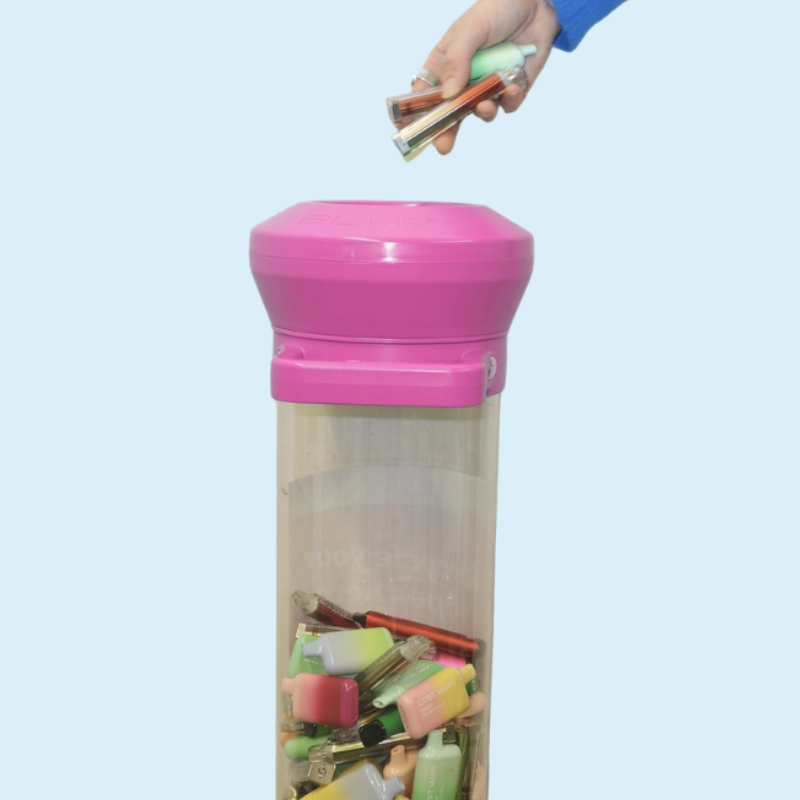
This week, we are looking at a tiny product that creates an outsized waste headache: disposable and semi-disposable vapes. They are easy to buy, easy to carry, and easy to toss aside. That last part is the problem. What looks like a single pocket-sized item is actually a messy bundle of plastic, metal, electronics, nicotine residue, and a lithium-ion battery.
That combination makes vape waste awkward from the start. For most people, a used vape does not clearly belong in any everyday bin. It feels too electronic for the trash, but putting it in curbside recycling is not safe either. EPA guidance on lithium-ion batteries is blunt on this point: batteries and devices containing them should not go into household recycling carts or ordinary trash because they can be damaged during collection or sorting and create fires.
Recent research from Material Focus in the UK shows how fast that confusion turns into a system problem. In a March 2026 report, the group estimated that more than 6.3 million vapes and pods were still being thrown away each week despite the UK single-use vape ban. Their follow-up reporting in late May argued that the issue is not just what people buy, but what happens after use. Too many shoppers still do not know vapes can be recycled, and too many stores make takeback hard to find or inconsistent.
That matters because vapes are not just litter. They are battery devices entering the waste stream at scale. Material Focus reported that major waste companies are still seeing heavy vape volumes in mixed recycling and ongoing fires in bin lorries and waste sites. Even when a fire does not become catastrophic, the consequences stack up fast: damaged equipment, rejected loads, delayed sorting, more danger for workers, and more cost pushed into a system that was never designed for this kind of product to be casually tossed away.
There is also a resource loss hiding inside the safety story. A vape may look cheap and disposable, but its battery and internal components still contain recoverable materials. Throwing millions of them away means losing plastics, metals, lithium, and copper that took energy and mining to produce in the first place. In other words, the product is marketed like a quick convenience item, but the waste system has to deal with it like a small piece of electronics.
What makes this issue especially interesting is that policy alone does not solve it. Banning one product format can reduce volumes, but it does not automatically fix disposal behavior. People still need clear signals at the moment they are done with the device. Is it refillable? Rechargeable? Returnable to a store? Safe for a takeback bin? Those questions are obvious to a waste professional and much less obvious to an everyday user standing in a kitchen or parking lot with a dead device in hand.
For households, the practical takeaway is simple: do not put vapes in the trash or curbside recycling. Treat them more like small electronics with batteries. Look for retailer takeback, local electronics recycling, or household hazardous waste options depending on what your area accepts.
The bigger takeaway is that this is what modern waste looks like now. More products arrive as compact hybrids: part packaging, part gadget, part hazardous item. If we want cleaner recycling and fewer fires, we probably need better source-side information, better drop-off design, and better feedback about what people are actually throwing away before those decisions disappear into the bin.
Vape waste is a reminder that better waste outcomes do not start at the sorting line. They start where people make the first decision, and that means better data, better education, and better interventions at the source.
Sources
U.S. EPA guidance on used lithium-ion batteries, updated March 2026
Material Focus research and press releases on vape disposal, recycling access, and fire risk published March and May 2026