

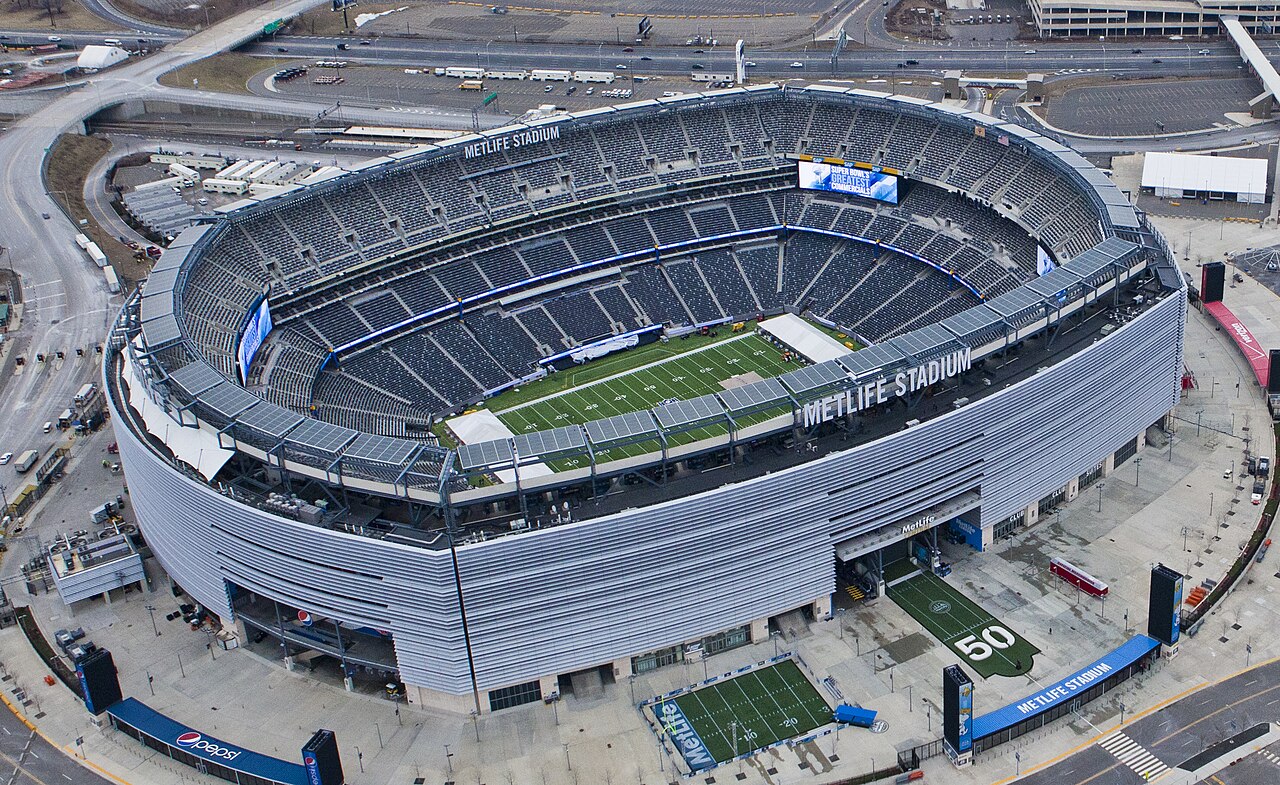
Aerial view of MetLife Stadium, the venue that hosted the 2026 FIFA World Cup final
Written by Ian Smith | July 22, 2026
Three days after the 2026 FIFA World Cup final, most of the public conversation is still about the match, the audience, and the spectacle. That makes sense. The final alone drew huge attention, and this year’s tournament stretched across 16 host venues in the United States, Canada, and Mexico. But once the goals, songs, and fireworks are over, every stadium still has to deal with a less glamorous part of the event: mountains of half-finished food, drink cups, boxes, cans, napkins, and packaging that all arrive at the bin at once.
That is where stadium waste gets expensive.
As of July 22, public tournament-wide waste totals for the 2026 World Cup do not appear to be available. But there are already clear warning signs in this year’s news cycle. In June, reporting tied to Toronto’s World Cup matches said that avoiding disposables there could have reduced waste by roughly 1 million plastic items. Even if we treat that as a host-city estimate rather than a tournament total, it gives a useful sense of scale: major football events move huge volumes of packaging in a very short window.
The hard part is not just how much material shows up. It is how mixed together it becomes. A fan holding a greasy food tray, an empty drink cup, a napkin, and a souvenir wrapper does not have much time to study labels while 80,000 other people are heading for the exits. Staff have the same problem at speed. When food, liquids, plastic, paper, compostables, and ordinary trash all land in the same stream, the result is contamination.
EPA guidance is blunt about what happens next. Food residue can make plastic containers unrecyclable. Compostable plastics can contaminate conventional recycling. Broken sorting rules do not just lower recycling rates in theory. They change where the material goes in practice. A load that might have produced compost or recyclable material often becomes ordinary garbage instead.
That matters financially. Disposal is not free, and it is getting more expensive in many places. One recent U.S. example: Resource Recycling reported this year that Orange County landfill fees were set to jump 53 percent. That is not a World Cup-specific number, and it should not be treated like a stadium rate. But it is a useful reminder that every extra ton sent to landfill sits inside a real operating budget. When material is sorted badly, the cost can show up through higher landfill or tipping fees, extra hauling, more back-of-house labor, and lost value from cans, bottles, cardboard, or organics that can no longer be recovered cleanly.
There is also a volume problem hiding inside the material problem. The EPA estimates that the United States generated more than 35 million tons of plastic in 2018, with only 8.7 percent recycled, and more than 63 million tons of food waste in the same year. A stadium is not a city, but it is a concentrated version of the same pattern: a place where convenience packaging and leftover food collide under time pressure. World Cup venues amplify that pressure because the crowd is larger, more international, more mobile, and less likely to be familiar with local sorting rules.
That is why the point of disposal matters so much in a tournament like this. If the only instruction is a small label on a bin lid, we should not be surprised when valuable material turns into trash. Clearer prompts, better bin design, better feedback for staff, and better visibility into what people are actually throwing away would all make a difference long before a bag reaches the loading dock.
The World Cup is supposed to show what a stadium can do at its best. Waste is one of the places where that test is most revealing. If venues want cleaner streams, lower disposal costs, and fewer missed recovery opportunities, the real work starts where the fan makes the first decision, not where the hauler picks up the bag.
Sources
Google News coverage of the July 19, 2026 FIFA World Cup final and July 22, 2026 U.S. viewership reporting
AP News and ESPN host-venue coverage noting 16 World Cup venues
Packaging Insights reporting on Toronto World Cup disposables and an estimated 1 million plastic item reduction potential, June 5, 2026
U.S. EPA, "How Do I Recycle Common Recyclables"
Resource Recycling reporting on a 53 percent Orange County landfill fee increase, May 11, 2026