


What caught our attention this week is a part of the waste stream most people touch every day but rarely think about as waste: clothing. California's textile extended producer responsibility program kept moving forward this year, with implementation steps and producer registration now becoming real work instead of a distant policy idea. That matters because textiles are one of those categories that feel invisible right up until they pile up.
For years, a lot of us were taught a comforting story about unwanted clothes. If they were still wearable, we could donate them. If not, maybe they would be recycled into something useful. In reality, the system is much messier. The U.S. EPA estimates that Americans generated about 17 million tons of textile waste in 2018. Only about 2.5 million tons were recycled, while roughly 11.3 million tons went to landfills. That is a huge stream of fabric, leather, and blended materials moving through a system that was never built to handle fast fashion at modern scale.
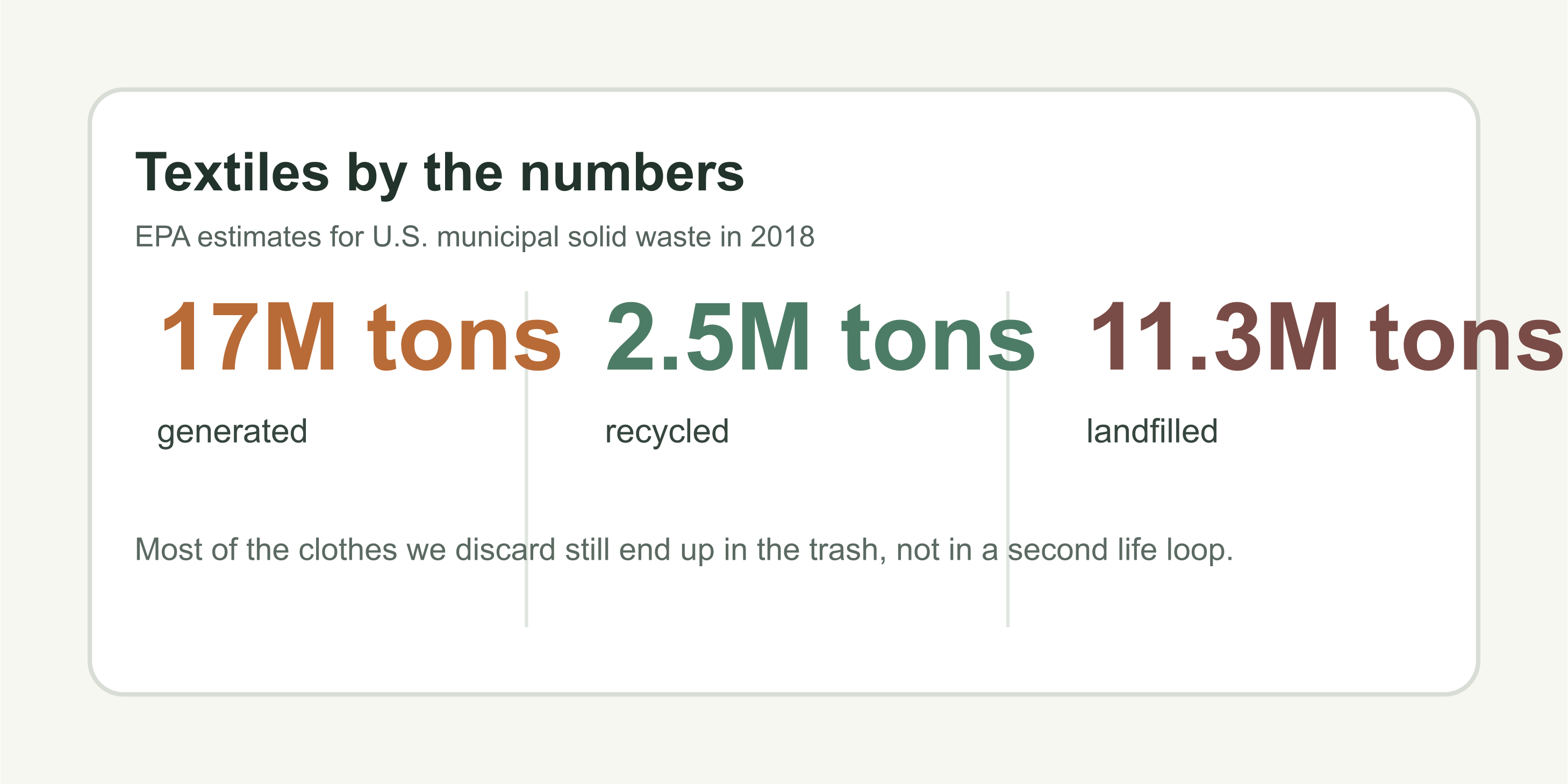
EPA textile waste snapshot showing generation, recycling, and landfilling estimates
The hard part is not just volume. It is quality and complexity. A T-shirt made from one fiber is easier to understand than a garment made from blended fabrics, stretch materials, coatings, trims, inks, and accessories. Add low resale value, inconsistent labeling, and contamination from wear or moisture, and the economics start to break. Donation networks also end up carrying part of the burden. When too many low value or damaged items arrive, charities and sorters can become the last stop before disposal rather than the first step toward reuse.
That helps explain why policymakers are starting to treat textiles more like packaging, paint, or electronics. Extended producer responsibility, usually shortened to EPR, is the idea that the companies putting products into the market should help fund and organize what happens when those products reach end of life. For regular people, that does not mean your closet is about to become a regulated zone. It means states are beginning to ask a simple question: if clothing creates a predictable waste stream, why should local governments and nonprofits be left to absorb the cleanup alone?
California is important here because it often acts as a preview of where broader material policy may go next. If textile EPR works even moderately well, we could see better collection rules, clearer public guidance, and stronger incentives for manufacturers to design products that are easier to reuse, repair, or recycle. If it struggles, that will be instructive too. Waste systems have a way of exposing whether a policy was built for real materials or just for good intentions.
The bigger lesson is that waste does not begin at the curb. It begins much earlier, when products are designed, purchased, used, and discarded with very little feedback built into the loop. Clothing waste is becoming a policy story because it is also a data story. We tend to get better outcomes when we understand what is being thrown away, where contamination enters, and which interventions actually change behavior at the source.
That wraps up this week's Waste Watch Wednesday. As more textile rules move from headlines into implementation, we will probably be reminded again that better recovery starts upstream, with better information and better decisions before materials ever become waste.