

Welcome back to Waste Watch Wednesday.
This week, we're looking at a problem that is easy to miss at home and expensive to ignore once trash and recycling start moving: loose batteries. From small lithium ion cells to disposable vapes and power banks, these items are showing up in household bins more often, and waste systems are paying for it in fires, equipment damage, delays, and safety risks.
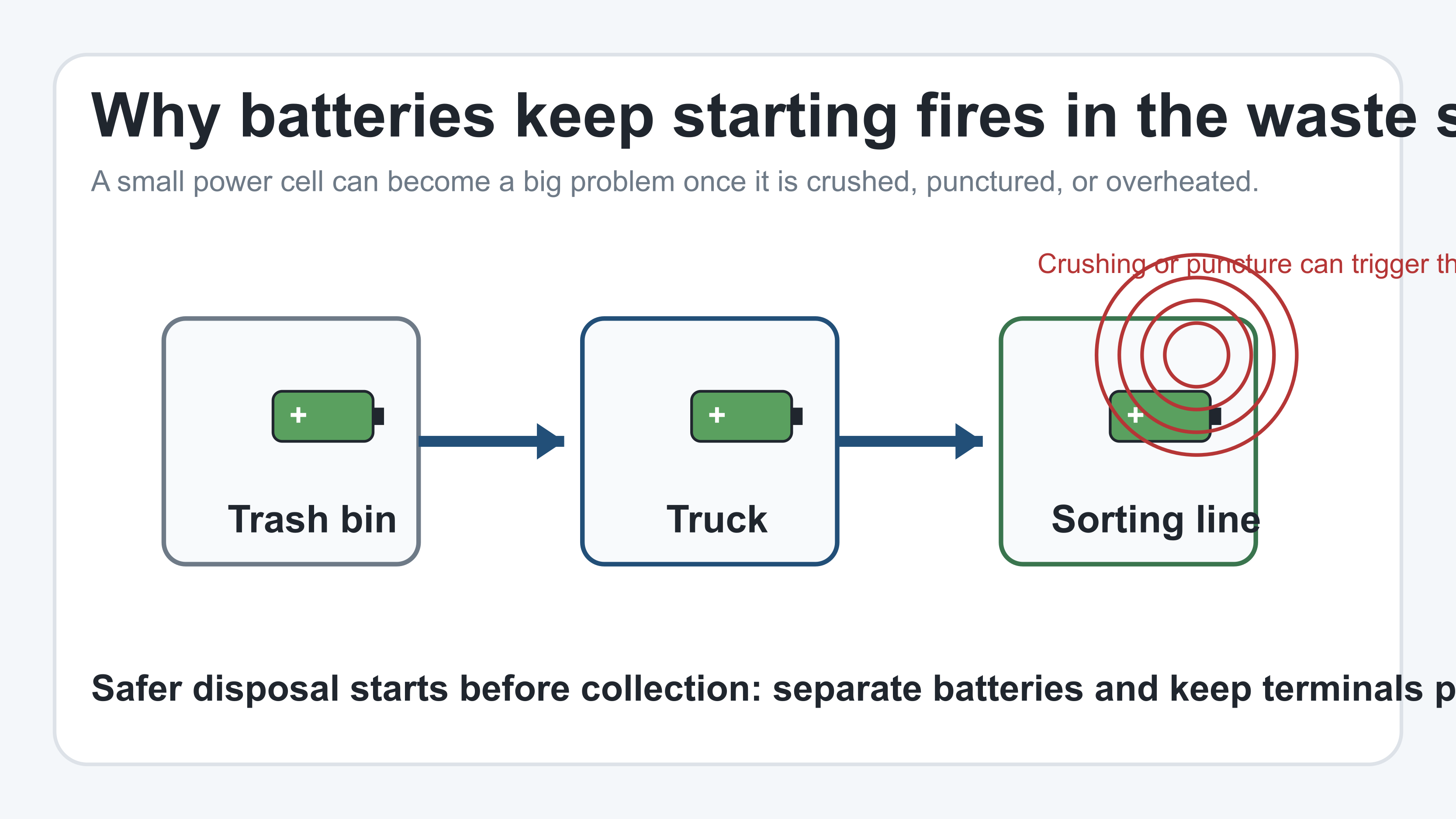
Why does this keep happening? Most people do not think of a used battery as a fire hazard. It looks dead, harmless, and small enough to disappear into the trash. But inside, many batteries still hold enough energy to spark if they are crushed, punctured, bent, or exposed to heat. That can happen in a collection truck, at a transfer station, or on a sorting line where heavy machinery is designed to compact and separate material at high speed.
Recent reporting has kept this issue in view for good reason. In the UK, the growing wave of disposable vapes has been linked to rising strain on recycling systems because those products combine plastic, electronics, and embedded batteries in a form that is easy to toss and hard to recover safely. In the US, lawmakers in states like Oregon have also been pushing battery recycling measures with fire prevention in mind. Industry reporting earlier this year pointed to fire data that continues to pressure facilities to add detection systems, retrain staff, and rethink how risky materials are handled.
For everyday households, this can sound like an industry problem somewhere far downstream. It is not. The waste stream starts with ordinary disposal decisions at home, at work, and in schools. A single battery in the wrong bin can shut down part of a facility, destroy material that otherwise could have been recovered, or put workers in danger. Even when a fire is contained quickly, the cost ripples outward through repairs, insurance claims, lost operating time, and contamination.
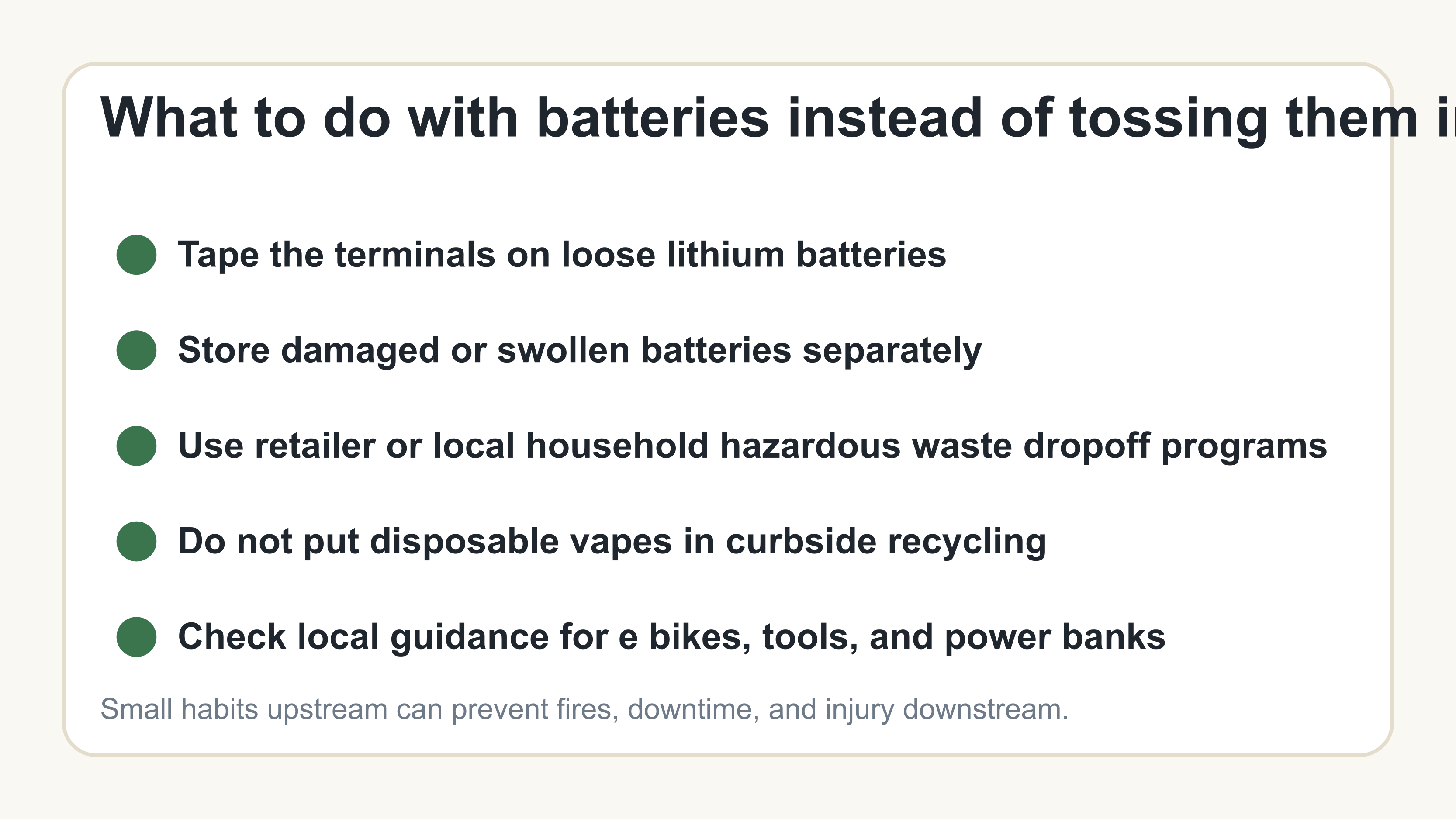
The frustrating part is that the fix is not mysterious. Batteries need to be separated before they enter the main waste flow. Retail take back programs, household hazardous waste collection events, and dedicated electronics drop off sites already exist in many places, even if they are not always well advertised. A little more public clarity would go a long way here, especially around products people do not always recognize as battery bearing items, like greeting cards, wireless earbuds, rechargeable tools, and disposable vapes.
This is also a good reminder that better waste outcomes rarely depend on infrastructure alone. Facilities can install suppression systems and operators can tighten protocols, but those are downstream defenses. Upstream education still matters. So does better visibility into what people are actually throwing away, when, and where. If we want fewer fires and cleaner material streams, we probably need better information and better sorting decisions before the truck ever arrives.
That wraps up this week's Waste Watch Wednesday.
Sources for this week's topic: - The Guardian, reporting on disposable vapes and recycling system strain in Britain - The Bend Bulletin, on Oregon's battery recycling bill aimed at preventing fires - Resource Recycling, on January fire data and shifting recycling safety practices