This week, we’re looking at a question that sounds simple but turns out to be surprisingly hard: what happens when we try to replace disposable packaging with containers that come back, get cleaned, and get used again?
California is becoming one of the biggest testing grounds for that idea. Under SB 54, the state’s sweeping packaging law, producers are expected to cut plastic packaging over time, with part of that reduction coming from source reduction. In plain English, that means not just recycling more of the same waste, but preventing some of it from being created in the first place.
That shift matters because recycling alone has limits. Even when a package is technically recyclable, it still has to be sorted correctly, collected cleanly, processed at the right facility, and sold into an end market that actually wants it. Every step can break down. Reuse tries to avoid some of that failure by keeping the package in circulation before it ever becomes trash.
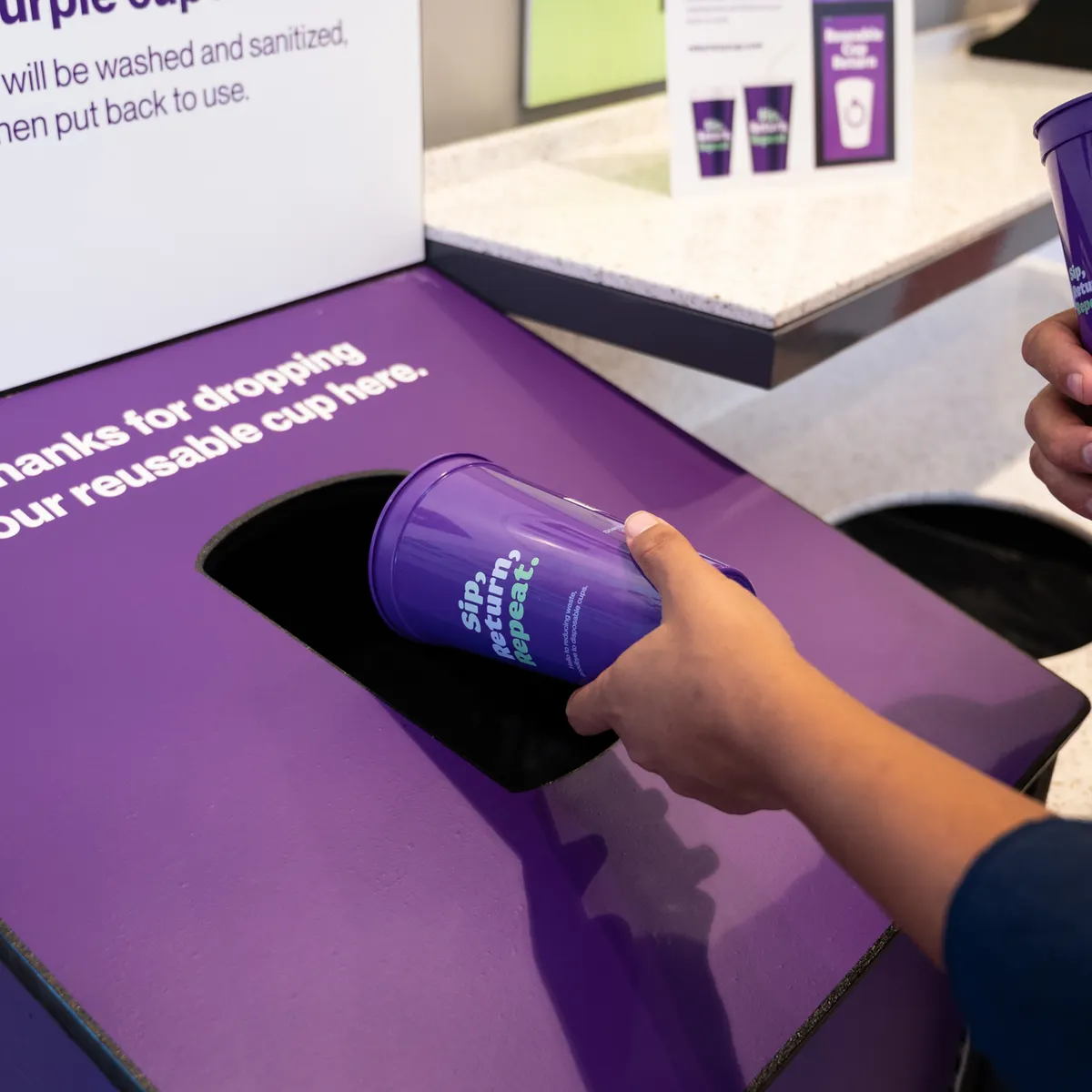
Recent reporting and state level planning around SB 54 show both the promise and the friction. One of the clearest examples came from Petaluma, California, where a citywide reusable cup pilot put purple polypropylene cups into participating cafes and installed return bins around town. The concept is easy to understand: borrow a cup, enjoy the drink, drop the cup in a collection bin, and let the system handle the rest.
The results were encouraging, but they also exposed the real operational challenge. A reuse system is not just a better cup. It is a logistics system. Someone has to collect containers, transport them, inspect them, wash them, redistribute them, and catch the ones that end up in the wrong stream. In Petaluma, the local hauler Recology reportedly recovered thousands of cups that had been tossed into recycling instead of returned for reuse. Once those cups went through the recycling stream, many were too damaged to go back into service.
That detail is worth sitting with. Even when people mean well, disposal habits are sticky. We have spent decades teaching people that most packaging is single use. Reuse asks people to pause, notice the system around them, and behave differently. That is not impossible, but it does mean convenience, signage, education, and collection design all matter a lot.
There is also the cost question. State assessments tied to SB 54 suggest the transition could require major investment across packaging design, reverse logistics, labor, and cleaning infrastructure. That sounds expensive because it is. But it also reveals something useful: waste is not just a materials problem. It is an operations problem. If we want less trash, we have to build systems that make the low waste option the easy option.
For everyday readers, the takeaway is not that reuse has won or failed. It is that the next chapter of waste reduction will depend less on slogans and more on whether these systems work in the messy real world of busy stores, distracted customers, and imperfect sorting behavior.
That wraps up this week’s Waste Watch Wednesday. If reuse and refill programs are going to scale, they will need better visibility into where materials go, where people get confused, and where collection breaks down. Better data and better source side feedback may end up mattering just as much as better packaging.
Sources
Waste Dive reporting on California SB 54 reuse and refill collection, May 26, 2026
California SB 54 source reduction planning coverage from May 2026