

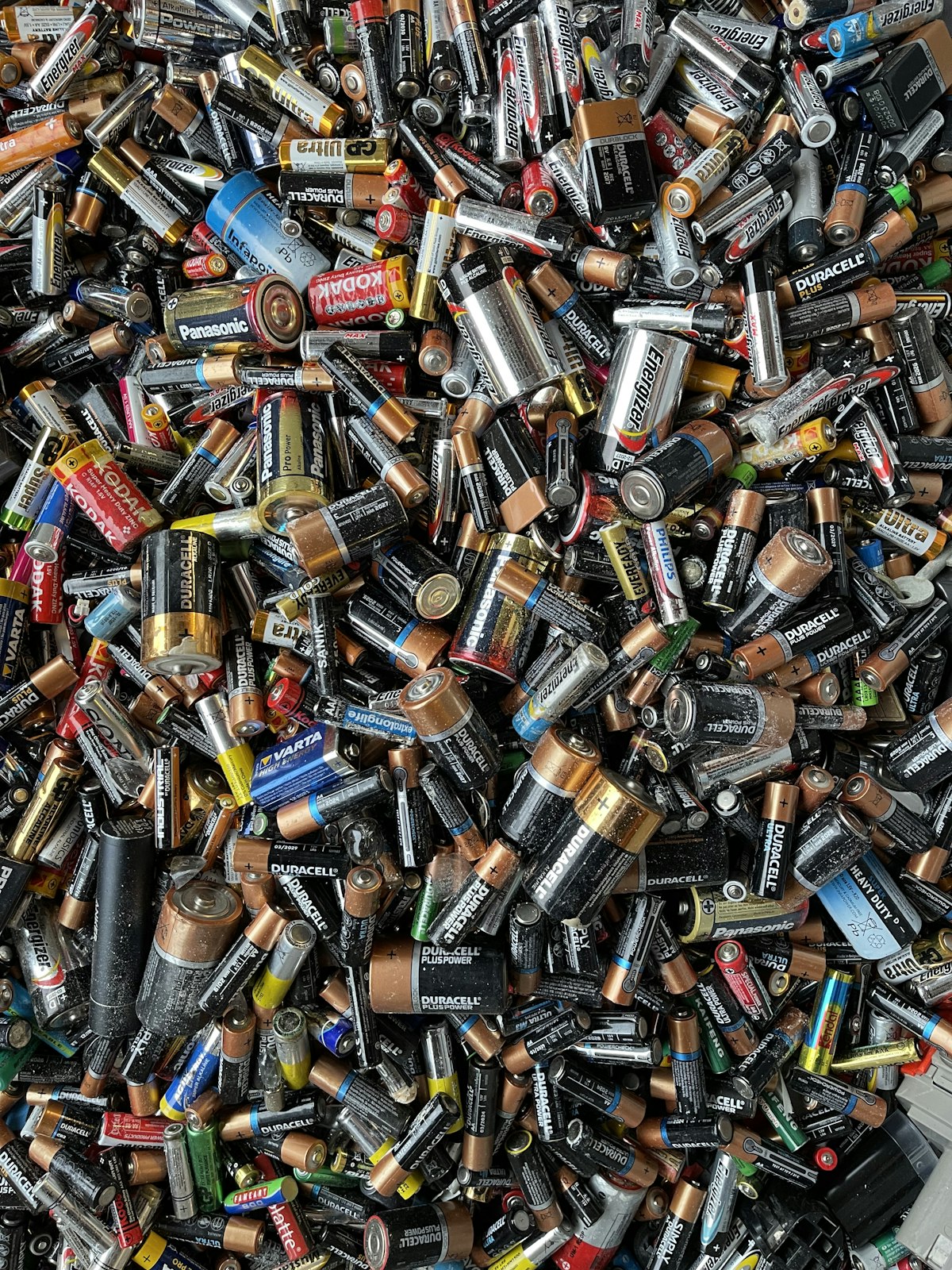
What caught our attention this week is a problem that looks small in the kitchen junk drawer but gets expensive and dangerous once it enters the waste stream: lithium battery fires.
Recent industry coverage has kept circling the same warning. Waste and recycling operators across North America are still dealing with fires tied to batteries hidden inside everyday items like vapes, earbuds, power tools, toys, and greeting cards. A new 2026 fire loss estimate making the rounds in the industry put the damage to recycling operators in the United States and Canada at roughly $2.5 billion. Around the same time, EPA officials were discussing battery recycling best practices with Congress, which tells us this is no longer a niche operations issue. It is now a systems issue.
For most people, the confusing part is that batteries do not look especially dangerous when they are sitting still. If a device is old, broken, or no longer charging, it is easy to assume it is harmless. But many lithium batteries still hold enough energy to ignite if they are crushed, punctured, bent, or overheated. That can happen in a garbage truck, on a recycling line, at a transfer station, or after burial in a landfill.
How a hidden battery becomes a waste-system problem
The waste system is full of moments where damage can happen fast. Trash trucks compact material. Mixed recycling streams bounce, scrape, and jam through sorting equipment. Facilities use conveyors, screens, magnets, and manual sort lines that were not designed around thousands of hidden rechargeable batteries. Even when a fire is contained quickly, the cost can be severe: downtime, damaged equipment, emergency response, contaminated loads, higher insurance costs, and real safety risks for workers.
The frustrating part is that many of these batteries arrive by accident, not malice. People are often trying to do the right thing, but the object in their hand does not clearly announce itself as a battery product. A disposable vape may look like plastic waste. A singing greeting card may look like paper. Wireless earbuds may be tossed because they are tiny. The modern waste stream is full of objects that look simple on the outside and electrically complex on the inside.
That is why this issue matters beyond fire prevention alone. It is also a design, labeling, and education problem. If products with embedded batteries keep blending into ordinary household waste, then the burden falls on workers and facilities to catch a hazard that should have been separated earlier. And once the item is mixed into a truckload, it is often too late.
The practical message for households is not complicated. If something lights up, charges, buzzes, heats, or contains a rechargeable component, it should get a second look before going into the trash or curbside bin. Battery take back programs, retailer collection points, and local household hazardous waste drop offs are slower than tossing something in the bin, but they are far safer for the people and equipment downstream.
The more our waste stream is filled with smart, powered, and disposable products, the more important it becomes to identify problem items before they disappear into mixed material. Better outcomes may depend on better source side signals, better public education, and better data about what is actually showing up in the bin.