

Written by Ian Smith Article Date: 2026-09-09
What caught our attention this week is New York Fashion Week. The [Council of Fashion Designers of America](https://cfda.com/news/view-the-preliminary-september-2026-official-nyfw-schedule/) says its official September schedule runs from September 10 through September 15, with Ralph Lauren, Coach, and several other presentations taking place today, September 9. The conversation will center on what is new. It is also a useful moment to ask what happens to clothing when it is no longer wanted.
That question leads to a surprisingly large waste stream. The U.S. Environmental Protection Agency's latest material-specific national estimates cover 2018, so they are a scale indicator rather than a real-time scorecard. EPA estimated that Americans generated 17 million tons of textiles that year. About 2.5 million tons were recycled, a 14.7% recycling rate, while landfills received 11.3 million tons.
Textile waste is complicated because "old clothing" is not one material or one condition. A clean, wearable coat may have a strong reuse path. A torn cotton shirt may be accepted by a textile recovery program. A wet or contaminated garment may not be usable at all. Blended fabrics, coatings, buttons, zippers, and elastic can make fiber-to-fiber recycling more difficult. Local acceptance rules matter.
One point deserves special emphasis: clothing generally does not belong in a normal curbside recycling bin unless a local program explicitly says otherwise. A shirt may feel recyclable, but a container-and-paper system is not automatically a textile collection system. Putting material into the wrong stream can contaminate otherwise recoverable items and leave workers or equipment to deal with the mistake later.
The same sorting problem appears beyond the home. Retail stores rotate displays and uniforms. Offices and campuses hold clothing drives. Hotels manage lost-and-found items and linens. Events sell merchandise that eventually reaches closets across the country. In each case, the useful questions are practical: Is there a reuse partner? Is there a dedicated textile collection point? Are people being told clearly what that program accepts? Can the organization measure participation and contamination?
Fashion Week cannot answer all of those questions, but it can widen the lens. Better materials and more durable design matter upstream. Repair, resale, donation, and clearly marked textile recovery matter after purchase. At the very end, disposal instructions still have to be clear enough for someone standing in front of a bin to make the right choice in seconds.
That is where the source-side principles behind a smart waste bin become relevant. MyMatR Coach provides two-stream trash and recycling education plus deposit-level waste data, while Maestro adds automatic rotation between two customer-configured trash or recycling streams. Neither product is a textile recycler or a replacement for a dedicated clothing collection program. The useful connection is visibility: better feedback and better waste data can show a venue, campus, office, or public building where ordinary disposal instructions are failing and where a separate collection option needs clearer support.
That wraps up this week's Waste Watch Wednesday. Fashion may move quickly, but the materials do not disappear when a trend changes. Keeping more textiles in use begins with design and purchasing, then depends on a clear next step when an owner is ready to let go.
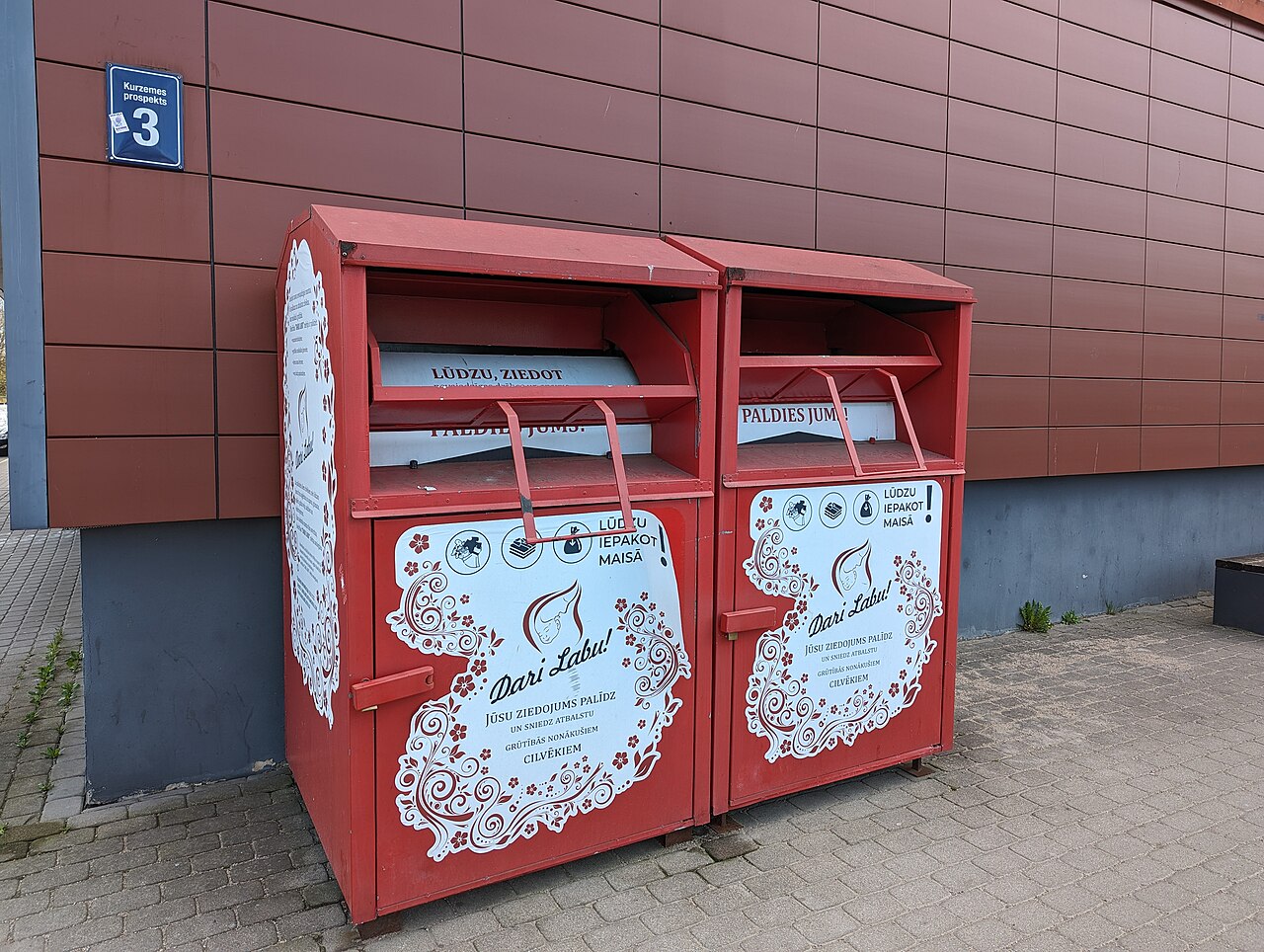
Sources: - [CFDA, "View the Preliminary September 2026 Official NYFW Schedule"](https://cfda.com/news/view-the-preliminary-september-2026-official-nyfw-schedule/) - [U.S. EPA, "Textiles: Material-Specific Data"](https://www.epa.gov/facts-and-figures-about-materials-waste-and-recycling/textiles-material-specific-data) - Featured image: ["Textiles collection box at Kurzemes prospekts 3, Riga," Andrey Romanenko, CC BY-SA 4.0](https://commons.wikimedia.org/wiki/File:Textiles_collection_box_at_Kurzemes_prospekts_3,_Riga.jpg)